Friday, April 10, 2020

Top 5 Oldest Recorded Songs in The World


History

Top 5 Oldest Recorded Songs in The World

In collaboration with vinyl and music expert Jeroen Hamelink
Today we're used to prime quality recorded music that we can easily download or stream – although some still prefer playing vinyl records. Can you imagine a time without recorded music? There was, of course, and the first songs ever recorded might not sound too great by today's standards, but these recordings were incredibly important for modern music recordings. What songs do you think were the first to be recorded? Find out if you're right below where we list the 5 oldest recorded songs in the world.
5. The Last Castrato (1902)There have been more song recordings in between 1889 and 1902, but this one is worth noting: 'The Last Castrato' by Alesandro Moreschi. Castrati were male singers who were castrated before the age of 10 in order to maintain their soprano to contralto voice. Castration prevented the voice dropping as a result of puberty, but since the lungs developed normally this provided the man with the voice of a young boy and the lung power of an adult. Alesandro Moreschi is the only Castrati who ever recorded his singing, and the last to perform; castrating young boys was forbidden in Italy in 1870. His recordings from 1902 and 1904 in the Vatican for The Gramophone & Typewriter Company give us an idea of what castrati sounded like. 

4. Hungarian Dance No. 1 (1889)On 2nd December 1889, Johannes Brahms was recorded by Theo Wangemann – a representative of Thomas Edison. The recordings include measures 13-72 of Brahms’ own 'Hungarian Dance No. 1'. An important milestone in musical recording, however the quality of the recording is so poor due to noise it was long criticised as holding no musical value. Today’s techniques have revealed that in the recording, you can hear Brahms himself talking and playing the piano.

3. Romance Op. 50 (1889)The same representative of Thomas Edison, Theo Wangemann, supervised a recording session in Berlin on September 13th 1889 where Herr Krahmer (violin) and Herr Schmalfuß (piano) played Beethoven's 'Romance Op. 50'. It is believed to be the first recording of Beethoven’s work, recorded in a time when several people who had known Beethoven were still alive.
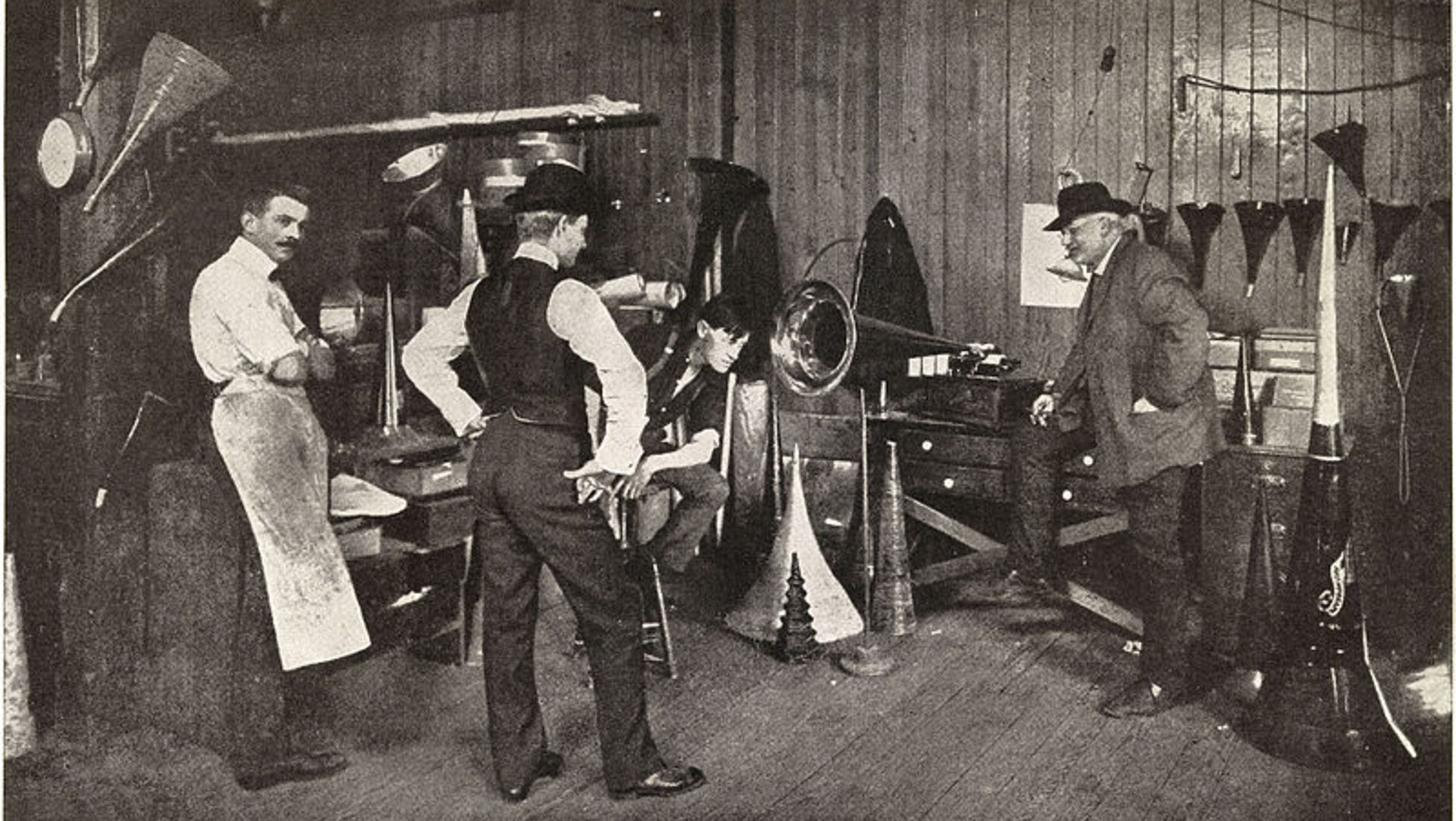
2. The Lost Chord (1888)There have been other voice - or even musical recordings in between 1860 and 1888, like a Thomas Edison tinfoil recording at a St. Louis museum demonstration and Edison reciting 'Mary had a Little Lamb'. But the next known song recording was in 1888, when Arthur Sullivan’s 'The Lost Chord' recording was presented at a press conference in London on behalf of the introduction of Edison’s perfected version of the phonograph. Arthur Sullivan composed 'The Lost Chord' at the side of the bed of his ill brother, who died a few days later.

1. Au Clair de la Lune (1860)This recording was discovered just a few years ago and it is believed to be the oldest recording of a human voice. 'Au Clair de la Lune' is actually a French folk song from the 18th century. A few lines of this song were sung by a woman and recorded on paper with a phonautograph in 1860 by Édouard-Léon Scott de Martinville. Before Edison, Scott de Martinville figured out how to make recording, but he couldn't work out how to play them back. Over 100 years later, in 2008, the recording was converted back to sound. Pretty amazing, although the recording is quite scratchy and a little haunting, as if the century old voice is struggling to be heard through time.

If you are an enthusiast for old recordings, take a look at Vinyl Record auction to find some vintage beauties for your collection. 

Foods That Don't Belong in the Fridge


Do you ever open your refrigerator and feel stressed by the cluttered shelves and drawers? It’s likely you’re stuffing grocery items into the cool temperatures without a second thought. When you’re mindlessly putting your kitchen staples into their places, you typically don’t wonder whether or not you’re storing them in the correct location. Instead, you rush to put them away and move on with your day. But the truth is, we need to pay more attention to where we’re storing our favorite food items.

Although there are debates about what does and doesn’t belong in your refrigerator, I’m here to tell you what items you should definitely remove from your refrigerator shelves. Not only will you declutter your fridge, but your groceries will taste significantly better when stored correctly. These are 30 foods that don’t belong in your refrigerator.

Tomatoes


ripe tomatoes should be kept on your counter, uncovered. When kept in the refrigerator, their flavor is affected. The cold temperatures reduce the functionality of the genes that allow the fruit to properly ripen.

Coffee


To keep coffee at its best, it should be stored in a dark, airtight container and not inside your refrigerator. Cool temperatures create moisture, which dulls the taste of coffee beans and grounds. If you want your coffee to keep its aroma and flavor, keep it stored at room temperature.


Potatoes


If you’re attempting to safely store your potatoes, avoid the refrigerator. Uncooked potatoes are best kept in a cool, dry, and dark environment. Low temperatures will turn starch into sugar at a quicker rate, which is why they should never be stored in the fridge.


Nuts


Nuts belong in the pantry if you plan to eat them in the near future. They will remain fresh at room temperature for a few months. That being said, if you don’t plan to eat them right away, they should be stored in the refrigerator or freezer (just know they may not taste as good when stored at a cooler temperature).

Onions


If you want to extend the shelf life of your onions by up to 30 days, move them from the refrigerator to the pantry. Like potatoes, the starches in onions are converted into sugars at a quicker rate when stored at cooler temperatures. The best way to store onions is by keeping them in a mesh bag in your kitchen cabinet.

Spices


Ground spices should always be stored in a kitchen cupboard or on a spice rack. These long-lasting ingredients are best kept at room temperature because they’re affected by heat, light, and moisture.


Melons

Watermelons and honeydew melons taste better and last longer when stored at room temperature. According to a study that appeared in the Journal of Agriculture and Food Chemistry, melons decay in less than a week when stored in the refrigerator which is reason enough to leave them on your counter rather than in your fridge.


Squash

Winter squashes should be kept out of the refrigerator because humidity causes produce to quickly deteriorate. Not only will squash last longer at room temperature, but it will also taste better.


Garlic
If you typically store your garlic in the fridge, remove it immediately. When refrigerated, garlic bulbs grow moldy due to increased moisture. They also begin to sprout because of the cold temperatures which is an indication that it’s being stored incorrectly. The best way to store garlic is in mesh bags or loosely woven baskets.

Oil
The majority of oils you use on a regular basis should be stored in the pantry. Extra virgin olive oil, canola oil, vegetable oil, and peanut oil taste best when stored in a cool, dry location. To maximize the shelf-life of these cooking oils, keep them out of the direct sunlight as well.


Nutella

Nutella is a delicious chocolate and hazelnut spread with a relatively short shelf life. Although you may believe storing it in the refrigerator is the best option, the chilly temperatures will harden the product so it’s no longer spreadable. Instead, place your jar of nutella in a cool, dry place and keep the lid tightly sealed.

Pumpkins
Pumpkins should be stored properly in order to extend their shelf life. Extremely cold and extremely warm temperatures can be harmful to pumpkins, which is why it’s recommended to keep them in a controlled environment like a pantry or cupboard.


Thursday, April 9, 2020

The effect of Ginger on diabetes and blood pressure

Ginger: Not Just Diabetes; It Can Help Reduce Blood Pressure As Well; Here's How You Should Have It:


Ginger root is available fresh, dried or even in the form of capsule or tablets. Irrespective of the form, ginger is extremely beneficial for your overall health.
The spice ginger can be said to be a super food because of its medicinal properties. People have been using this root for cooking and healing for thousands of years. Ginger has been found to possess broad spectrum anti-bacterial, anti-parasitic, anti-viral and anti-inflammatory properties. The spice also contains many types of powerful antioxidants, including gingerols, shogaols, and zingerones. It is due to these amazing properties that the spice helps in curing several health issues. Ginger root is available fresh, dried or even in the form of capsule or tablets. Irrespective of the form, ginger is extremely beneficial for your overall health. Let us discover how the spice can help in reducing high blood pressure and hypertension.

Ginger for diabetes:
A healthy spice ginger is low in carbohydrates and calories. Ginger is a popular herb which is known for its intense, spicy flavor and aroma which offers numerous health benefits. It goes without saying that ginger cannot cure diabetes but adding it into your diet can have a positive impact on your health. A 2012 review study confirmed that ginger shows can be effective for glycemic control in diabetes mellitus and can even improve insulin sensitivity. In addition, it is also exhibited to have a protective effect against diabetic complications. All the more, ginger has a low glycemic index (GI). This is extremely beneficial for diabetics as low GI foods release glucose into the blood at a slower rate, preventing unwanted spikes in blood sugar levels. The spice can be added to many dishes and beverages. It can even enhance the taste of the dishes. You can add ginger to your herbal tea, salads, soups and even some vegetables. You can even have a glass of ginger water in the morning. 

Also, the intake of processed drinks, like ginger ale and ginger beer should be avoided as these contain loads of added sugar which can be harmful for people suffering from diabetes. 
You can add ginger to your herbal tea, salads, soups and even some vegetables.

Ginger for hypertension:
Ginger may also help in decreasing high blood pressure by preventing the formation of blood clots in your arteries and blood vessels. Blood clots can restrict or prevent blood from flowing through your circulatory system, which can further lead to high blood pressure. By preventing blood clots, ginger may also help in preventing heart diseases like heart attacks and strokes.
Ginger is certainly a healthy alternative than additives like salt, which can increase the risk for high blood pressure when used in excess. 

Further the chemical compounds in ginger may help lower overall blood cholesterol, as well as low density lipoproteins. These are the components of cholesterol that can contribute to heart disease. Cholesterol and low density lipoproteins can contribute to sticky plaque along the walls of your arteries and blood vessels. This creates blockages in the circulatory system that can contribute to high blood pressure by restricting the inner diameter of blood vessels and arteries. Plaque may also reduce the elasticity of your arteries, which further leads to high blood pressure.

Therefore, it becomes necessary to add ginger to your diet. Ginger is certainly a healthy alternative than additives like salt, which can increase the risk for high blood pressure when used in excess. 

Other health benefits of ginger are:
Ginger can help soothe muscle pain

Ginger is great for digestion

Ginger can help protect you from cardiovascular diseases

Ginger can be helpful for curing cold and flu

Ginger can put you at a less risk of cancer

Due to its anti inflammatory properties; ginger can help improve brain function as well 

9 secret ways or Tips for Growing a Successful Business.


To succeed in business today, you need to be flexible and have good planning and organizational skills. Many people start a business thinking that they'll turn on their computers or open their doors and start making money, only to find that making money in a business is much more difficult than they thought. You can avoid this in your business ventures by taking your time and planning out all the necessary steps you need to achieve success.

1. Get Organized
To be successful in business you need to be organized. Organization will help you complete tasks and stay on top of things to be done. A good way to do this is to create a to-do list each day. As you complete each item, check it off your list. This will ensure that you're not forgetting anything and you're completing all the tasks that are essential to the survival of your business.

2. Keep Detailed Records

All successful businesses keep detailed records. By keeping detailed records, you'll know where the business stands financially and what potential challenges you could be facing. Just knowing this gives you time to create strategies to overcome those challenges.

3. Analyze Your Competition
Competition breeds the best results. To be successful, you can't be afraid to study and learn from your competitors. After all, they may be doing something right that you can implement in your business to make more money.

4. Understand that risk and the rewards
The key to being successful is taking calculated risks to help your business grow. A good question to ask is "What's the downside?" If you can answer this question, then you know what the worst-case scenario is. This knowledge will allow you to take the kinds of calculated risks that can generate tremendous rewards.

5. Be creative
Always be looking for ways to improve your business and to make it stand out from the competition. Recognize that you don't know everything and be open to new ideas and new approaches to your business.

6. Stay Focused
The old saying, "Rome was not built in a day," applies here. Just because you open a business doesn't mean you're going to immediately start making money. It takes time to let people know who you are, so stay focused on achieving your short-term goals.

7. Prepare to Make Sacrifices

The lead-up to starting a business is hard work, but after you open your doors, your work has just begun. In many cases, you have to put in more time than you would if you were working for someone else, which may mean spending less time with family and friends to be successful.

8. Provide Great Service

There are many successful businesses that forget that providing great customer service is important. If you provide better service for your customers, they'll be more inclined to come to you the next time they need something instead of going to your competition.

9. Be Consistent

Consistency is a key component to making money in business. You have to consistently keep doing what is necessary to be successful day in and day out. This will create long-term positive habits that will help you make money in the long run.


Whatever type of business you want to start, using these nine tips can help you be successful in your venture.

Schitt's Creek' cast says an emotional goodbye

The popular Canadian comedy created by father-son team Eugene and Dan Levy aired its final episode on Tuesday.
The Rose family was beloved for six seasons by not just viewers, but also the cast.
The younger Levy, who starred as David Rose, bid farewell to the show in an Instagram post.